


Have you ever caught a faint smell and suddenly found yourself transported back to a childhood home, a forgotten holiday, or a person you haven’t thought about in years?
That moment isn’t coincidence or imagination. It’s neuroscience at work. Among all our senses, smell has a uniquely powerful connection to memory and emotion, one that scientists, perfumers, and psychologists continue to explore.
In this article, we’ll unpack the science behind scent and memory, explain why smell shapes emotion so deeply, and explore how this knowledge is transforming modern fragrance through aromachology.
What Is Olfactory Memory?
Olfactory memory refers to the brain’s ability to associate smells with memories and emotions. Unlike visual or auditory memories, scent-based memories are often involuntary, vivid, and emotionally charged.
This happens because smell is processed in a part of the brain that predates language and rational thought. Before we analyze or label a scent, we feel it.
This is why scent is often described as the most emotional sense and why it plays such a powerful role in personal identity, wellbeing, and atmosphere.
The Neuroscience of Smell: Why Scent Bypasses Logic?
To understand why smell and emotion are so tightly linked, we need to look at the brain.
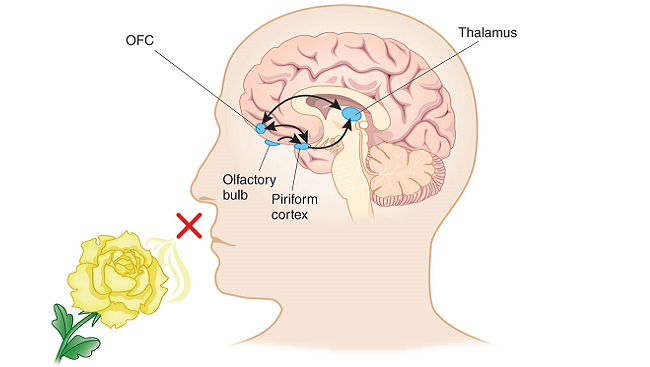
When you inhale a scent:
-
Odor molecules enter the nasal cavity
-
They activate olfactory receptors
-
Signals travel directly to the olfactory bulb
-
The olfactory bulb connects to the amygdala (emotion) and hippocampus (memory)
Here’s the key difference:
Most senses (like sight or sound) pass through the brain’s rational filtering center, the thalamus. Smell does not.
This direct neural pathway explains:
-
Why scent triggers memories instantly
-
Why emotional reactions to smell are often subconscious
-
Why scent-based memories feel more intense than visual ones
In short, the neuroscience of smell shows us that scent doesn’t ask permission, it goes straight to feeling.
5 Reasons Scent Is More Emotionally Powerful Than Other Senses
1. Smell Is Evolutionarily Ancient
Smell evolved to help humans survive, detecting food, danger, and social cues. Emotional reactions to scent are therefore deeply wired.
2. Scent Memories Are Long-Lasting
Studies show that olfactory memories decay more slowly than visual memories, sometimes lasting decades without reinforcement.
3. Smell Is Hard to Verbalize
Because scent bypasses language centers, we struggle to describe it. This ambiguity allows emotion to dominate interpretation.
4. Smell Triggers Emotion Before Thought
You feel comfort, attraction, or aversion before you identify the scent itself.
5. Scent Is Contextual
The same smell can mean safety to one person and sadness to another, depending on personal history, making scent deeply individual.
Aromachology: The Science of Scent and Emotion
While aromatherapy focuses on physical wellness, aromachology studies how scent affects mood, cognition, and behavior.
Aromachology explores questions such as:
-
Can scent reduce anxiety or mental fatigue?
-
Can fragrance improve focus and productivity?
-
How do certain botanical notes influence emotional states?
Research in this field has linked specific scent families to emotional responses:
-
Citrus → alertness and optimism
-
Woody notes → grounding and calm
-
Floral notes → emotional openness and comfort
-
Resinous notes → introspection and depth
This science is increasingly used in luxury perfumery, hospitality, wellness spaces, and even work environments.
Scent, Identity, and the Self
One of the most overlooked aspects of smell is its role in personal identity.
Your signature scent becomes:
-
A social marker
-
A memory anchor for others
-
A sensory extension of your personality
This is why people often associate loved ones with a specific fragrance and why losing that scent can feel like losing presence.
Modern fragrance lovers are moving beyond trends toward personal scent narratives, choosing perfumes that reflect who they are rather than what’s popular.
Scent in Spaces: Emotion Beyond the Body
Smell doesn’t just affect individuals, it shapes environments.
Hotels, spas, boutiques, and homes increasingly use ambient scent to:
-
Create emotional consistency
-
Influence mood and dwell time
-
Strengthen brand recognition
Unlike visual branding, scent works invisibly, building atmosphere without demanding attention. This makes it one of the most subtle yet powerful design tools available.
Why Natural, Botanical Scents Matter to the Brain?
Not all scents interact with the brain in the same way.
Synthetic fragrances often rely on sharp, linear aroma chemicals designed for projection and longevity. Natural botanical ingredients, on the other hand, tend to be more complex and dynamic, closer to what the human olfactory system evolved alongside.
Benefits of natural scent compositions include:
-
Greater emotional nuance
-
Reduced sensory fatigue
-
Better alignment with aromachological principles
This complexity allows natural perfumes to evolve on skin and in space, creating layered emotional experiences rather than static impressions.
The Future of Fragrance: Emotional Design, Not Just Smell
As consumers become more experience-driven, fragrance is shifting from ornament to tool from smelling “nice” to feeling meaningful.
We’re seeing growing interest in:
-
Mood-based perfumes
-
Fragrance as part of mental wellness
-
Regenerative and ethical sourcing
Viti Vinci in the Context of Sensory Transformation
This deeper understanding of scent and emotion is at the heart of Viti Vinci.
Viti Vinci is a niche fragrance house that blends art, science, and nature through the lens of aromachology. Every creation is designed not just to smell beautiful, but to evoke emotion with intention.
What sets them apart:
-
100% natural, botanical ingredients
-
Sourcing from their regenerative wild farm in Mallorca
-
A focus on emotional response rather than mass appeal
-
Offerings that extend beyond perfume into candles, diffusers, and bespoke scent experiences
For fragrance collectors, Viti Vinci offers olfactory storytelling. For wellness, hospitality, and design brands, they offer signature ambient scents that shape atmosphere and memory. For individuals, they offer deeply personal fragrances aligned with mood, identity, and lifestyle.
In a world overwhelmed by noise and visuals, Viti Vinci reminds us of something ancient and powerful: scent doesn’t shout, it lingers, connects, and remembers.
Frequently Asked Questions About Scent, Memory, and Emotion
Why does smell trigger memories so strongly?
Smell has a direct neurological connection to the brain’s limbic system, which controls emotion and memory. Unlike sight or sound, scent bypasses rational processing, triggering memories and feelings instantly and often involuntarily.
What is olfactory memory?
Olfactory memory is the brain’s ability to store and recall memories associated with smells. These memories tend to be vivid, emotional, and long-lasting, often resurfacing years later without conscious effort.
Why are scent memories more emotional than visual memories?
Visual memories pass through the brain’s filtering and reasoning centers. Smell does not. Because scent goes straight to emotional and memory centers, the emotional response often happens before conscious thought.
Is there science behind scent and emotion?
Yes. Neuroscience shows that odor signals travel directly from the olfactory bulb to the amygdala (emotion) and hippocampus (memory). This explains why scent can instantly trigger comfort, nostalgia, attraction, or aversion.
What is aromachology?
Aromachology is the scientific study of how scent affects mood, behavior, and emotional states. It’s used in modern perfumery, wellness, hospitality, and workspace design to intentionally influence how people feel.
Can certain scents influence mood or mental state?
Research in aromachology suggests that different scent families are associated with emotional responses. For example, citrus notes are linked to alertness, woody notes to calm and grounding, and florals to comfort and emotional openness.
Why are scent-based memories so long-lasting?
Olfactory memories decay more slowly than visual or auditory memories. Because they’re emotionally charged and neurologically direct, they can remain vivid for decades without reinforcement.
How does scent relate to personal identity?
A person’s signature scent often becomes a memory anchor for others. Smell acts as a non-verbal form of identity, shaping how we’re remembered emotionally rather than visually.
Why do natural botanical scents feel different from synthetic ones?
Natural botanical scents tend to be more complex and dynamic, closer to what the human olfactory system evolved alongside. This complexity often creates richer emotional responses and reduces sensory fatigue.
How is scent used in spaces like hotels, homes, or wellness centers?
Ambient scent is used to shape atmosphere, influence mood, and strengthen memory and brand recognition. Because scent works invisibly, it’s a subtle but powerful design tool for emotional experience.
How is fragrance evolving today?
Modern fragrance is shifting from trend-driven products to emotional design. Consumers are increasingly drawn to mood-based perfumes, bespoke scents, and fragrances rooted in science, sustainability, and personal meaning.